A testimony of what remains when language fails to hold life
From the Heart of Shared Ruin
Before these words reached you, I had to unlearn the language I once believed could hold what I witnessed. I had to gather what remained of myself. I lived among these people. I shared their fear, their cold, their famine, and their long, suspended waiting beneath the lashes of war. I believed I had already seen the limits of human suffering. I was wrong.
I have used fictitious names to protect those who appear in these testimonies, not to obscure truth, but to shield those still exposed to it. Because even truth, in such places, requires protection.
What follows is not fiction. It is what remains when human experience survives everything except being heard.
When Language Collapses Before Reality
There is a vocabulary the world uses to speak about Gaza – words that sound precise but function as insulation.
‘Conflict.’ ‘Humanitarian crisis.’ ‘Cycle of violence.’
These are not descriptions. They are distance.
What is unfolding is not only the destruction of buildings, but the erosion of the conditions that make human life psychologically coherent.
In Gaza, there is no ‘post-trauma,’ because there is no ‘post.’
Safety is not lost; it is repeatedly withheld.
The question is no longer what is happening, but how long language can continue to disguise it.
Fear as a Place
“I realized the war had moved inside me,” Younis says, “when fear stopped being temporary.”
For him, the explosion is not the longest moment. The longest moment is what comes after it, the suspended silence in which the body learns to wait for the next rupture.
Sleep becomes broken not because rest is impossible, but because rest itself feels like exposure.
The most unbearable part, he explains, is not fear itself, but watching fear reorganize the people you love while you remain unable to protect them.
The Ordinary Collapse of Meaning
Saeed once believed classrooms were among the most stable inventions of human civilization.
During displacement, families who had lost their homes moved into school classrooms, believing them to be among the last sanctuaries — spaces that, by any human logic, should have remained untouched.
Then one night, a shell struck one of those classrooms, killing three girls as they slept.
After that, he stopped using the word ‘safe’.
The Passage That Was Not a Passage
The roads are called ‘safe corridors’, though nothing about them carries the meaning of safety.
Sama describes moving through one of them, where movement itself felt provisional, as if life could be interrupted mid-step without warning.
She saw a tank advance over a young man in front of her as if he had never been human at all.
At checkpoints, she encountered a form of exposure that resists language, an assault not only on the body, but on the idea that the body has inviolable boundaries.
She survived physically. But survival did not mean continuity.
Something in her remained behind.
What Remains of a Meeting
There are moments that begin as an attempt to return to life, and end as proof that life, as it was known, no longer exists.
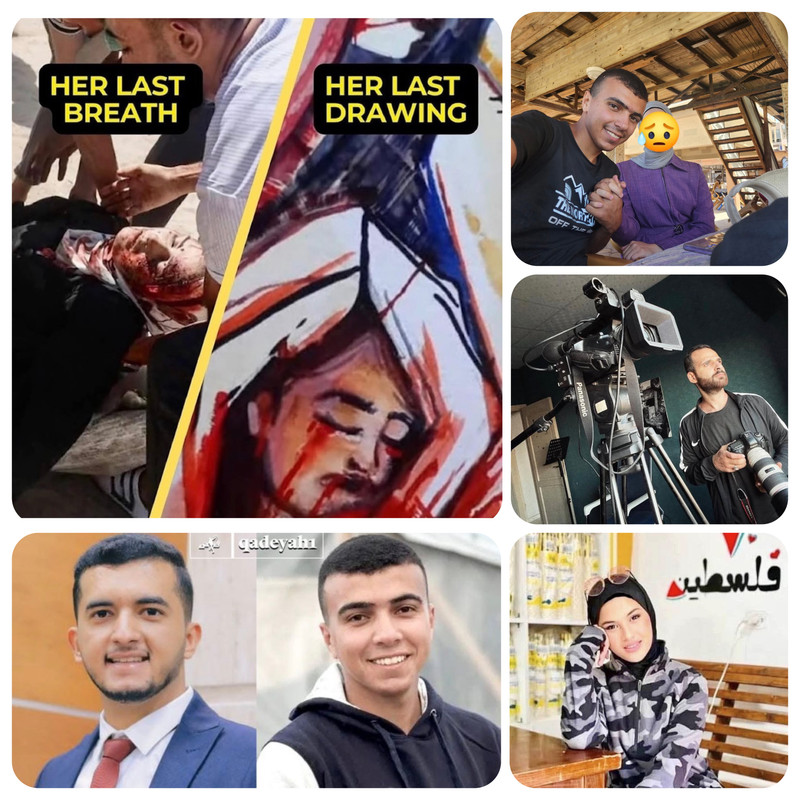
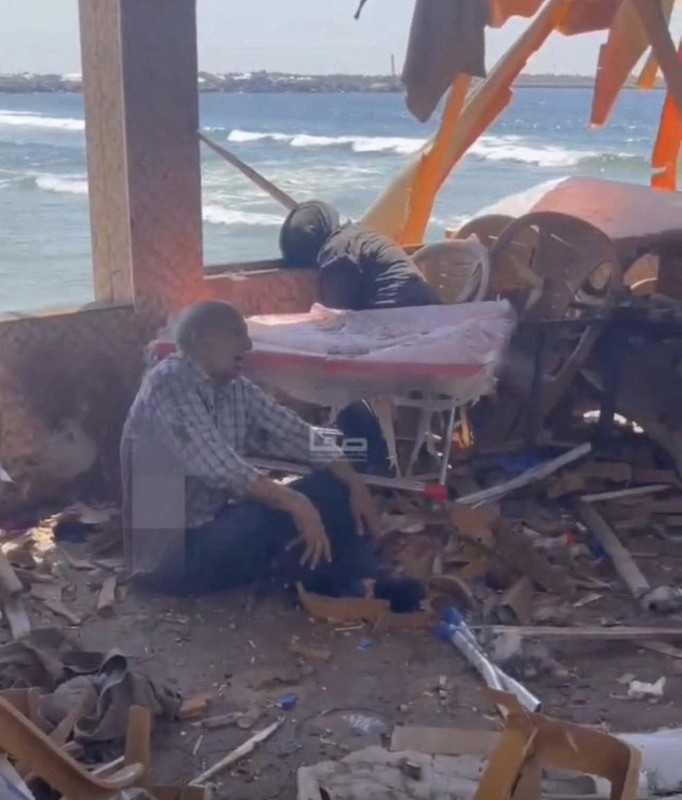
A young woman described meeting her friends for the first time in nearly two years. War had scattered them, turning distance into something heavier than geography. That day, they chose a place they once loved — a place that still held the memory of who they had been before everything broke.
They arrived. They laughed.
And then, without warning, the air changed.
The strike came.
“I saw them,” Nour said, “but I did not recognize them. Not as people. Not as my friends.”
Bodies without limbs.
Voices cut mid-sentence.
A silence that did not belong to this world.
She was pulled from the rubble with severe injuries.
But what remained with her was not the pain.
It was the thought that followed it: “I was afraid they would save me,” she said, “because I knew I might wake up without my arms…or my legs.”
She did not fear death.
She feared surviving into a body she could no longer inhabit — and a life that no longer had anyone left in it.
When Life Ends Before It Begins
Mariam was pregnant.
She speaks of it carefully, as if precision might protect what language cannot repair.
The injury came suddenly. The pregnancy ended.
“They killed him before he saw the light,” she whispers.
“While he was still inside me.”
Her womb, once a place of expectation, has become a space defined by absence. What remains is not only grief, but an unanswerable question: why is survival never evenly distributed?
The Child Who No Longer Returns
Omar is seven years old.
There is a form of silence in children that is not absence of sound, but absence of response.
After the airstrike, he saw his mother among the rubble, no longer whole, but fragmented beyond recognition.
Since then, he no longer reacts as children do. He observes instead of responding.
To him now, bodies and people are not events of presence, but objects that may disappear without warning.
There are experiences beyond which childhood does not continue in the same form.
Survival as Burden
“The hardest part is not death,” Layla says, the only survivor of her family. “It is being left alone with your own name.”
She speaks as if language itself has become an echo chamber with no return.
Nearby, Khaled carries another form of the aftermath.
His father left to bring food after Khaled said he was hungry.
He never returned.
Now hunger itself has changed meaning. Every meal becomes a repetition of absence.
“If I had known,” he says quietly, “I would have chosen to starve.”
The Birthday That Stopped Time
There are losses that do not arrive as death — but as interruption.
A mother was preparing a simple cake for her daughter’s sixth birthday. Nothing elaborate — just enough to say that life, somehow, was still moving forward.
The child was waiting.
Her father left to bake the cake.
He never came back.
The oven was struck.
The cake was never finished.
Later, the child asked a question that no language could answer: “Did he forget my birthday?”
She did not cry.
She waited.
As if waiting long enough might bring him back.
The Search for an End
There are moments when suffering no longer feels like
something that can be endured.
Karam describes moving toward areas known to be lethal.
He was not seeking death in the dramatic sense. He was seeking limitation.
“I was looking for an end that made sense,” he says.
It is not a desire for destruction, but for definition — for a boundary to what has become without boundary.
Conclusion: A Moral Condition
What is happening in Gaza is not only a catastrophe in Gaza, but a global moral condition.
Silence is not neutrality; it is participation in what is allowed to continue.
When civilian life becomes this fragile, and the world adjusts its attention instead of its response, the line between the unacceptable and the normalized begins to disappear.
Gaza is not an exception to the world. It is a reflection of what the world is willing to tolerate under the language of necessity.
And so, the question is no longer political. It is existential: What does it mean to live in a world that can witness this, and remain unchanged?
All my writings are published under the CC BY-NC-SA 4.0 license.
GoFundMe: https://www.gofundme.com/f/support-the-voice-of-a-blogger-in-gaza